

The platform
The operating foundation for embodied intelligence.
White Sky brings intelligence, mission control, safety, fleet operations and institutional integration into one unified autonomous systems platform.
Embodied Intelligence
Machines operating in the physical world must interpret conditions that cannot be fully specified in advance.
White Sky develops the perception, reasoning and decision layers that allow a machine to build an operational understanding of its environment, evaluate what it observes against a defined objective and select an appropriate course of action.
Intelligence is expressed through missions rather than isolated behaviours, so that an operational objective set by an institution can be carried through to physical execution without ambiguity.
- Multimodal sensing consolidated into a single operational picture
- Objective-driven planning bounded by defined operating limits
- Decision-making designed for environments that change during a mission
- Continuous evaluation of mission progress and completion
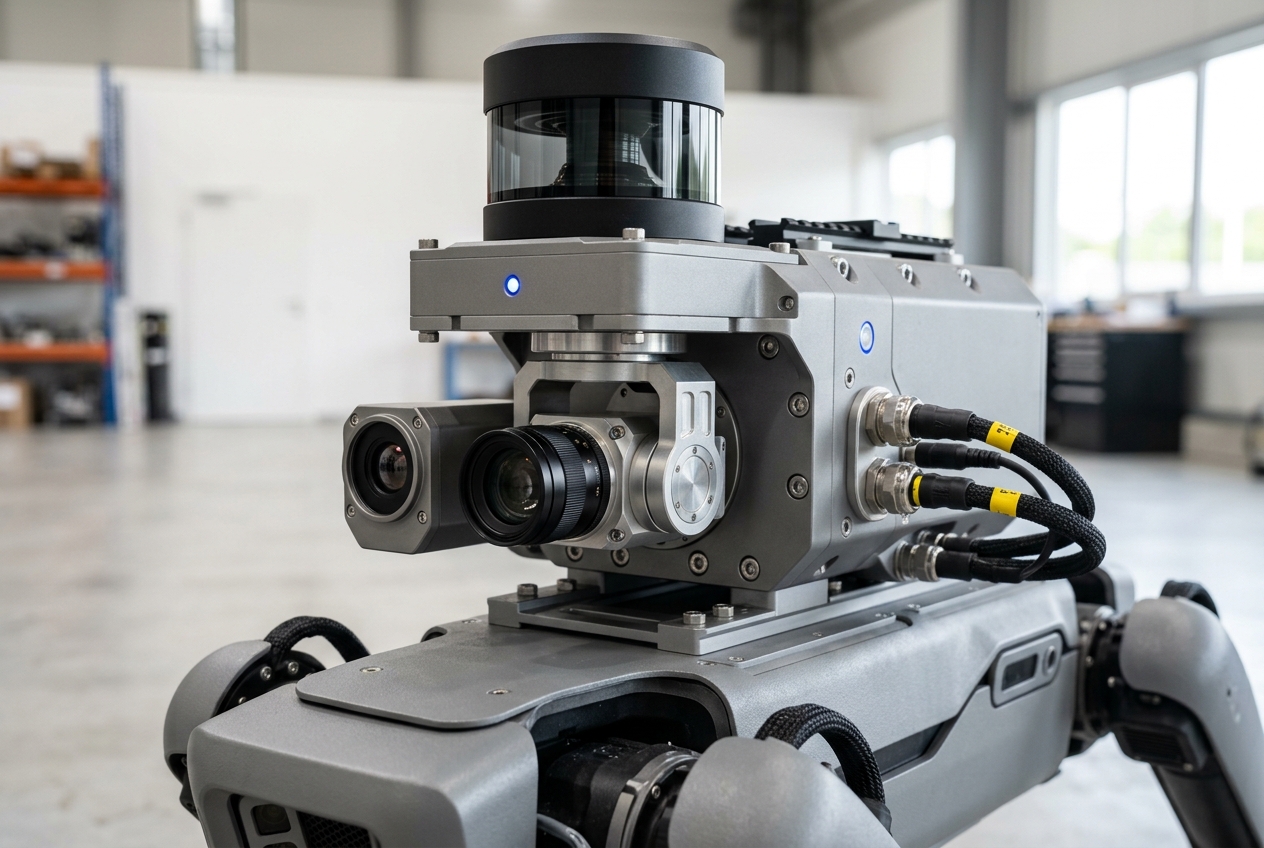
In practice
A process plant with a fixed weekly inspection round.
- The machine walks a defined route and holds position at each inspection point.
- Visual, thermal and acoustic readings are captured from the same reference framing every cycle.
- A reading outside the agreed range is raised for an engineer rather than acted on by the machine.
Specific configurations are defined with each institution.
Hardware Abstraction
Institutions should not have to rebuild their operating model each time a machine changes.
The platform is designed to operate across different physical systems, including legged, wheeled, aerial and fixed sensing platforms, through a common abstraction layer rather than a single vendor-specific integration.
Capabilities, sensing configurations and motion characteristics are described in a consistent way, so that missions, safety rules and oversight remain stable as the underlying hardware evolves.
- A common representation of platform capability and constraint
- Mission definitions that remain portable across machine types
- Sensor configurations described independently of the platform
- Designed to accommodate new classes of machine over time
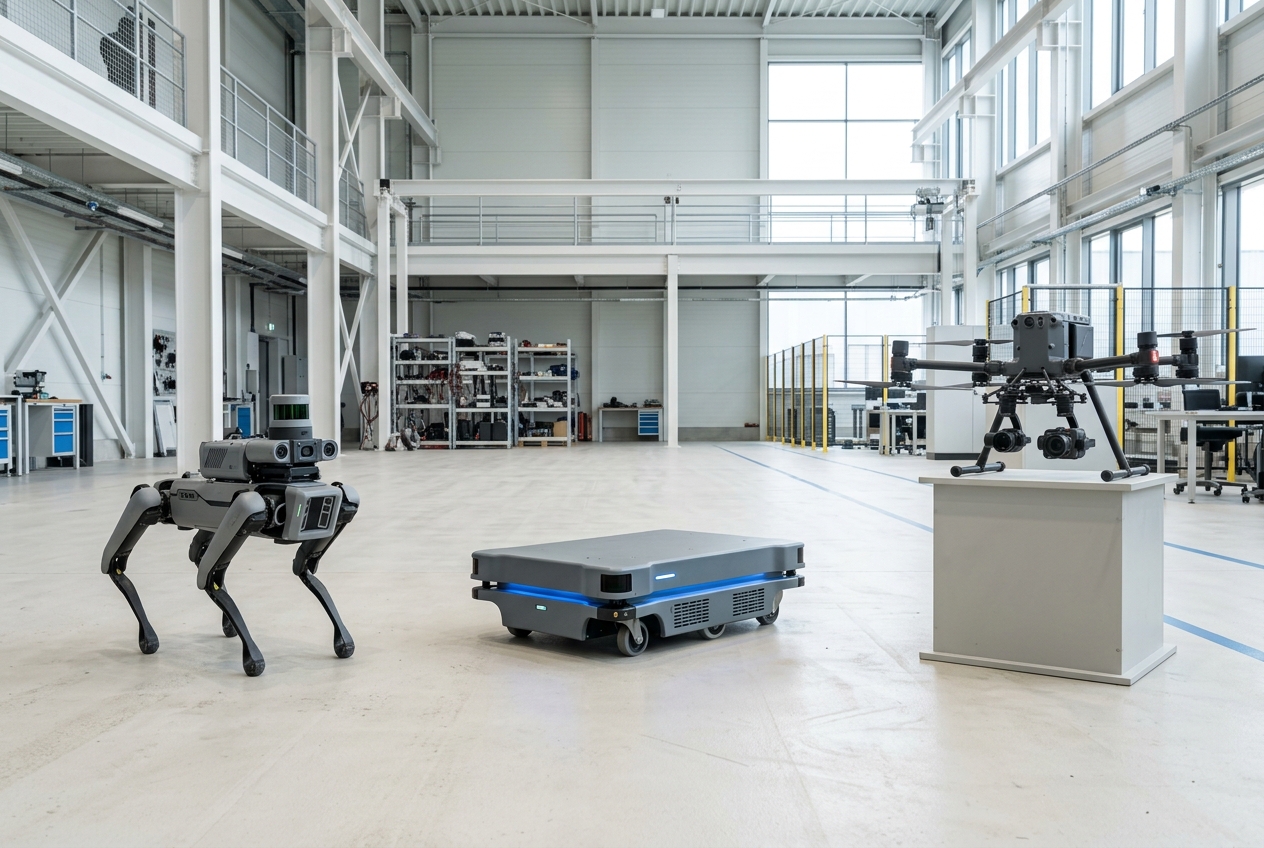
In practice
A site running wheeled platforms indoors and a legged platform outdoors.
- The same inspection mission is described once and assigned to whichever platform suits the terrain.
- Operators work in one interface instead of one console per manufacturer.
- Replacing or adding a platform class does not require the mission library to be rewritten.
Specific configurations are defined with each institution.
Mission Orchestration
An institutional objective is not the same thing as a machine instruction.
Mission orchestration translates operational intent, such as an inspection regime, a patrol requirement or a materials movement task, into governed, repeatable machine operations with defined preconditions, boundaries and expected outputs.
Missions can be scheduled, triggered by operational events or requested by an authorised operator, and every execution produces a consistent operational record.
- Institution-specific mission templates
- Scheduling, event-driven and operator-initiated execution
- Defined preconditions, boundaries and completion criteria
- Consistent operational outputs across repeated missions
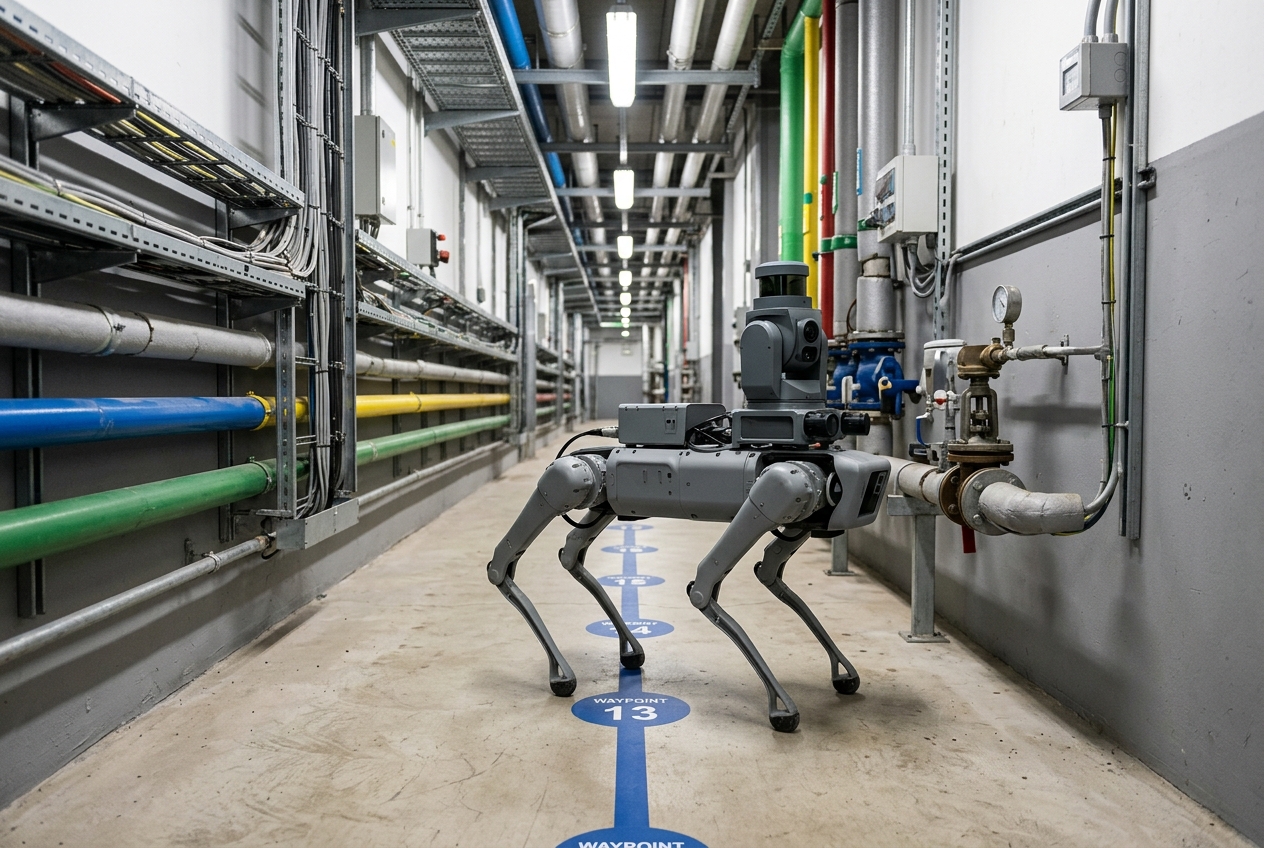
In practice
A utility corridor inspected on a fixed schedule and after any alarm.
- A scheduled mission runs each night; an alarm from the control system can trigger the same mission immediately.
- The mission will not start unless weather, battery state and access conditions are within agreed limits.
- Each run closes with the same set of outputs, so successive runs can be compared directly.
Specific configurations are defined with each institution.
Safety and Human Oversight
Autonomy is only acceptable where the boundaries of autonomy are explicit.
The platform is built around defined operating envelopes, independent safety controls and clear intervention pathways. Where a situation falls outside agreed parameters, the system is designed to degrade predictably and escalate to a human decision-maker.
Oversight is treated as a first-class function rather than a fallback: operators can observe, pause, redirect or end an operation, and the resulting record remains available for review.
- Explicit operating envelopes and geographic boundaries
- Independent safety controls and fail-safe behaviour
- Defined escalation and human intervention pathways
- Traceable records of decisions and interventions
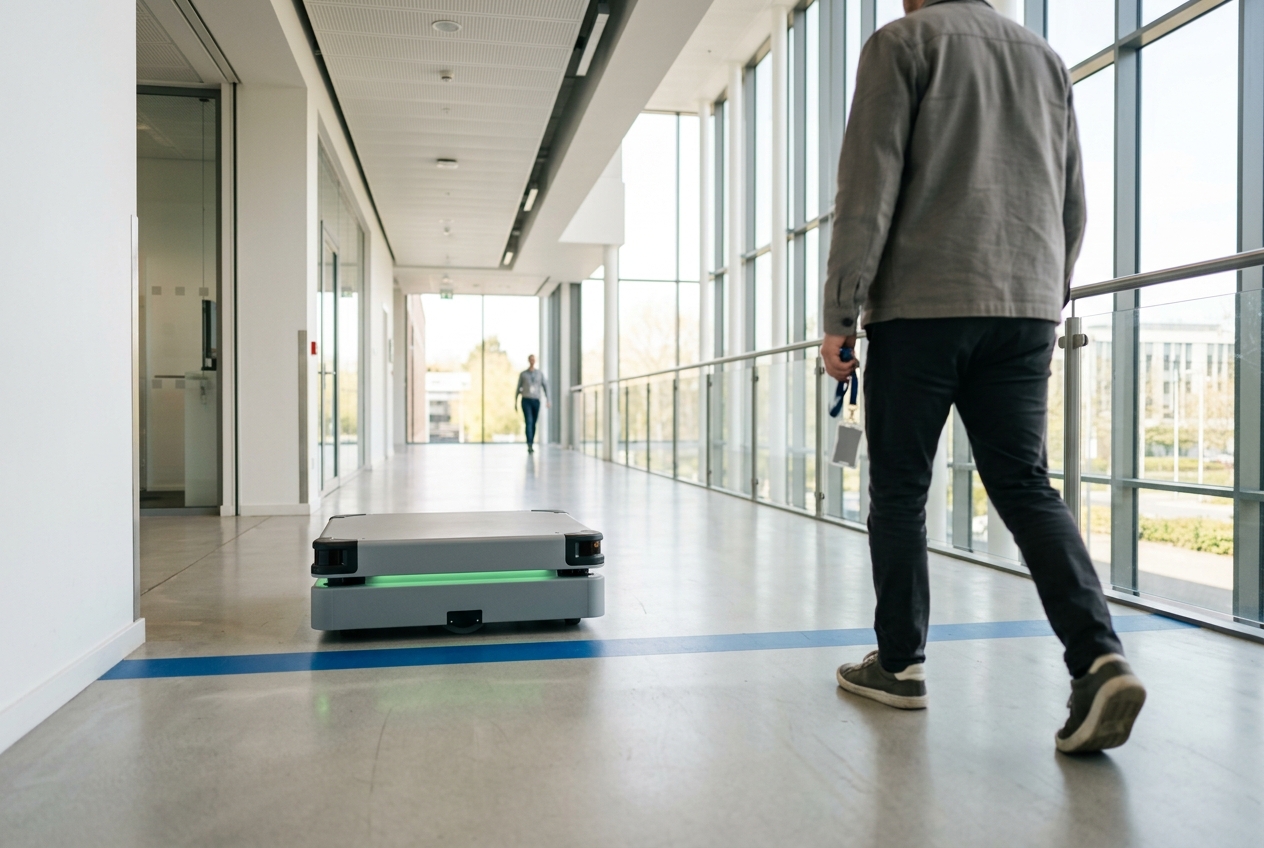
In practice
A public building where people and machines share the same floor.
- The machine is confined to approved zones and approved hours, and gives way to people at all times.
- An unexpected obstruction causes it to stop and hold rather than attempt a workaround.
- The duty operator can pause, redirect or end the task at any point, and the intervention is recorded.
Specific configurations are defined with each institution.
Fleet Operations
A deployment becomes infrastructure only when it can be operated over years.
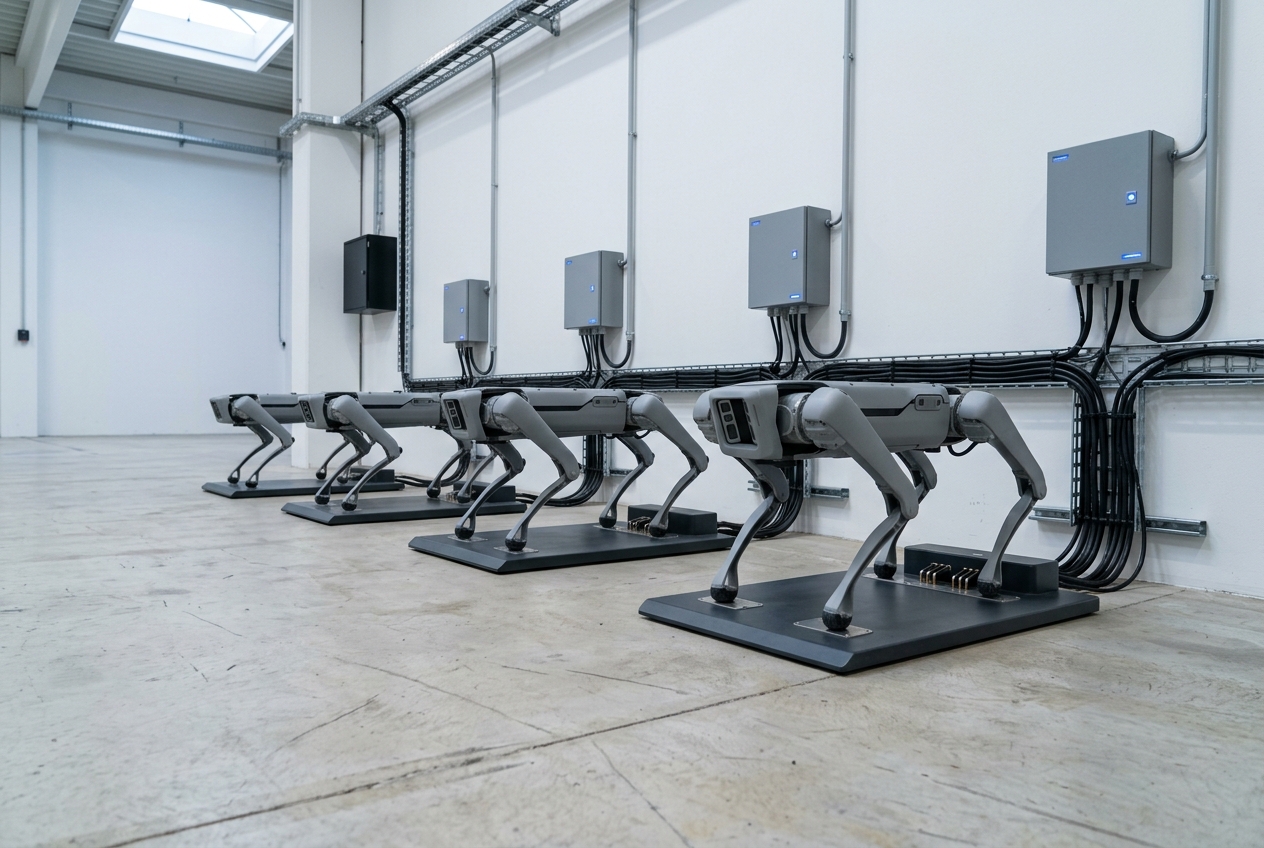
Fleet operations covers the practical work of keeping distributed autonomous systems available and current: provisioning, monitoring, telemetry, software updates, maintenance signals and lifecycle reporting.
The objective is operational continuity, so that institutions can understand fleet condition, plan maintenance and expand capacity without disrupting existing operations.
- Provisioning and controlled deployment of new systems
- Health, availability and telemetry monitoring
- Managed, staged software and configuration updates
- Maintenance signals and lifecycle reporting
In practice
Systems distributed across several sites under one operations team.
- Availability, battery health and connectivity are visible for every machine in one place.
- Software updates are staged to a small group first and only then extended across the fleet.
- Wear indicators trigger maintenance before a machine drops out of service unexpectedly.
Specific configurations are defined with each institution.
Institutional Integration
Autonomous systems have to work inside the institution as it already exists.
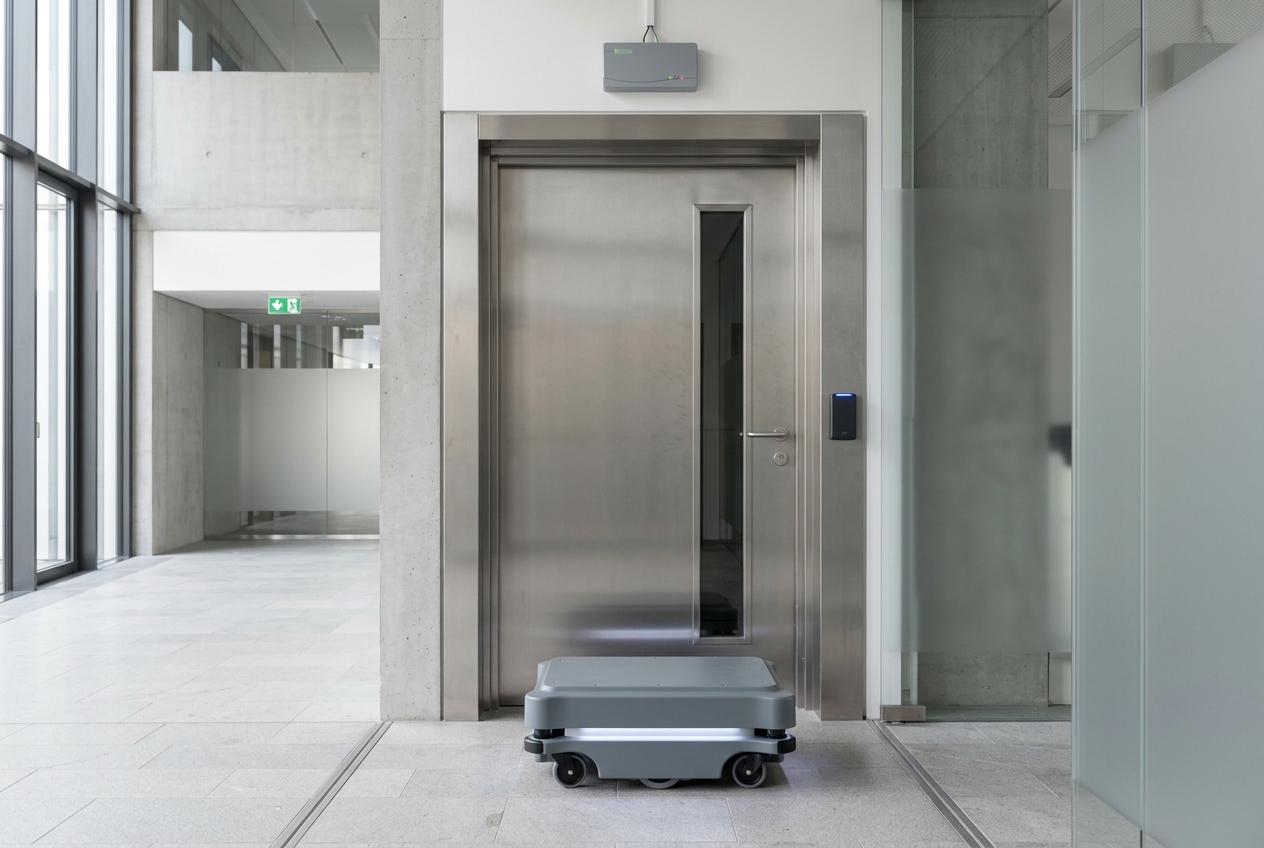
The platform is designed to connect with the operational, security, infrastructure and enterprise systems institutions already depend on, so that autonomous operations appear within established workflows rather than beside them.
Integration is approached with an emphasis on interoperability and controlled data exchange, in collaboration with technology and deployment partners.
- Interfaces with operational and control room environments
- Alignment with existing security and access models
- Interoperability with infrastructure and enterprise systems
- Deployment models suited to sensitive environments
In practice
An operations centre already running its own control and access systems.
- Findings arrive as work items in the maintenance system the team already uses.
- Access to machines and recordings follows the organisation's existing roles and permissions.
- Doors, lifts and barriers are requested through the building systems already in place.
Specific configurations are defined with each institution.
Discuss how the platform applies to your environment.
Platform capability is shaped around the operational conditions of each institution. Briefings are arranged privately.